
In 1883, a young aristocratic Englishman seeks his fortune working as a cowboy in the American Wild West.
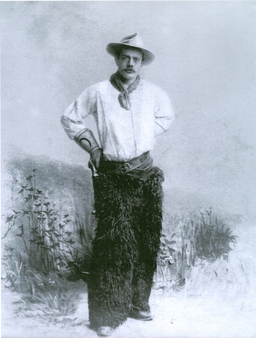
In 1883, when 19-year-old William Hugh Cooke arrived in America, cattle ranching in the western states of America was booming. Between 1860 and 188O the rush to buy land and cattle had spread like a fever. By 1883, within little more than 20 years, virgin land once roamed by herds of buffalo had become cattle and cowboy country.
William’s letters chronicle a transition from early innocence to young maturity, a transition from paid hand to employer of men and owner of property.
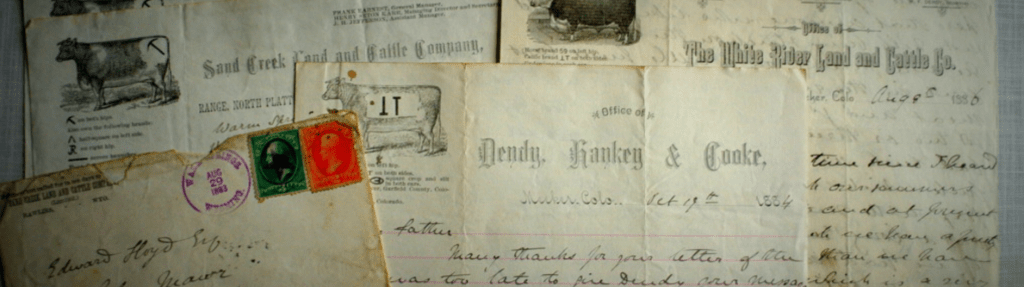
The Letters of W H Cooke 1883 to 1893
When the 19-year-old William Hugh Cooke landed in New York in 1883, cattle ranching in the western states of America was booming. Between 1860 and 1880, the rush to buy land and cattle had spread like a fever. By 1883, within little more than 20 years, virgin land once roamed by herds of buffalo had become cattle and cowboy country.
William Hugh Cooke emerges as a man eager to succeed, but a pragmatist. Land was in his blood; on his return to England, he founded the firm of Cooke and Arkwright, chartered land surveyors, dealing in the sale and valuation of the most important estates in North Wales and the border countries.
His letters are clearly those of a young man – he was only 19 when he left England in love with the freedom and the physical hardships of the ranching life, thirsty for knowledge and experience, but also under some parental pressure, the pressure any young English Gentleman felt in the late Victorian age, to ‘make good’. He found cowboy life tough but simple; ranch ownership far less simple, and just as tough. His letters chronicle a transition from early innocence to young maturity, a transition from paid hand to employer of men and owner of property. Unfortunately, the hard winters and low prices of the late 1880s ended his American enterprise, as they did for hundreds of other cattle owners in the American West.
He returned home without his fortune, but with an attitude to life forged in the furnace of the West.
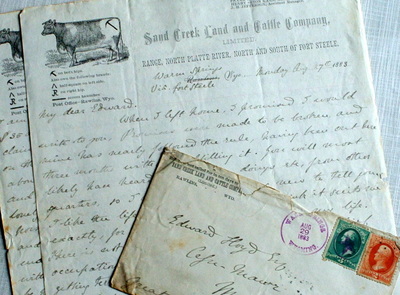


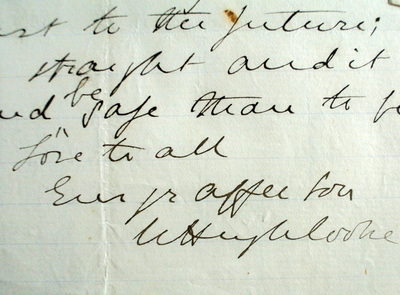

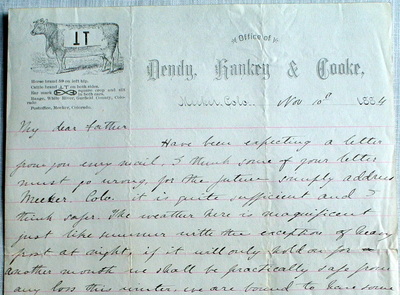
Extract from a letter: Sunda,y July 8 1883
“Just Back From The Round-up”
We had a lot of night herding to do. It is hard work to get up in the middle of the night and stand on relief, herding the cattle.
I had a terrible dose of it one day, my turn came for the last relief at two in the morning. I stayed on till quarter to six, then came to camp, got a hasty breakfast of dry bread, cold tinned tomatoes and a cup of black coffee, then mounted again at six o’clock rode till 6.15 in the evening without a mouthful and in a boiling sun, making sixteen hours in the saddle with one insufficient meal.
These occasions rarely happen, but it is what a cow puncher of the West has to put up with. He never knows how long he may be without food and what sort of food he may get, but when he gets it you may be sure he has a good feast and however dirty or bad the food it, he can eat it.
People say that a man eats a peck of dirt in his life, but I am sure he eats a peck on the “round up”. There is nearly always a wind which blows the ashes and sand into everything; you would call us uncivilised, we have no manners; on getting into camp, each man unsaddles his horse, lets him loose, seizes a tin plate and cup, a knife and fork, and helps himself out of the dirty looking black pot which is always on the camp fire, then seizes a loaf of bread and breaks a piece off with his hand, which is usually very dirty, and proceeds to eat. The meal finished, he saddles up another horse and to work again.
Such is the daily routine of a “cow puncher”. However, after all the hardships and dirt, I never felt better in my life. I don’t know what feeling ill is and I am thankful for it, as health is the greatest bon of life. If you had seen me on my return you would not have known me, dusty, dirty and my coat in rags, never having had my underclothes off for nearly a fortnight and never brushed my hair, and unshaved, all the skin burnt off my nose by the sun, in fact a horrible looking ruffian.

1983 BBC Radio 4 Letters from a Cowboy
In 1983, the BBC commissioned me to write and present a radio documentary based on my great-grandfather’s letters, written in 1883 while he worked as a cowboy in Wyoming.
The finished programme was broadcast on BBC Radio 4 on Tuesday, July 12, 1983, and repeated on Saturday, September 3. It also featured on BBC Radio 4’s Pick of the Week.

1993 The Tenderfoot Documentary
In 1993, I produced a documentary based on letters William Hugh Cooke wrote about his time in America, along with interviews I conducted with ranchers in 1989.

